




How to Use Locals Frequently Asked Questions and Help Topics:
https://support.locals.com/en/article/how-do-i-upload-videos-podcasts-photos-r49es4/
If you need more help contact LOCALS Support at:


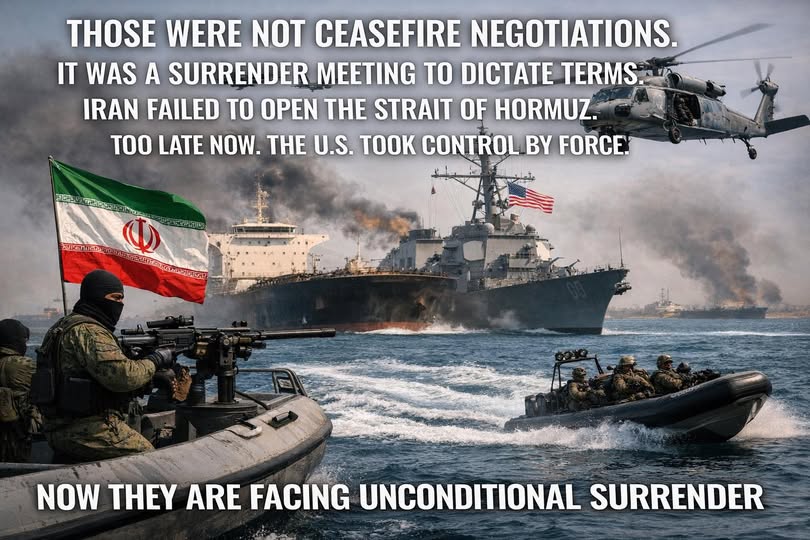
The Iranian delegation did not understand why they were meeting with JD Vance. They thought they were negotiating a ceasefire. They were not. They were negotiating the conditions of surrender.
That is the clearest way to understand what happened in Islamabad.
For all the diplomatic language, for all the careful phrasing, for all the international theater that surrounds these meetings, the core issue was never complicated. The United States was not there to haggle over cosmetic wording, to create a face-saving exercise for Tehran, or to help the Iranian regime buy time. The central American demand was that Iran give up the path to nuclear weapons and stop using the Strait of Hormuz as a choke collar around the world’s energy supply. That is not a routine ceasefire discussion. That is a demand that a hostile regime surrender the leverage it uses to threaten the region and the world. Public reporting on the failed talks says JD Vance blamed the collapse on Iran’s refusal to renounce any nuclear-weapons path, while Iranian officials complained about U.S. demands over Hormuz and other core issues. 
Iran either failed to grasp that reality, or pretended not to. It came to the table acting as though this was a normal negotiation between equals, as though it still held the power to dictate the pace, the terms, and the limits of what would be discussed. But when a regime has spent years financing terror, destabilizing its neighbors, threatening shipping lanes, and pursuing capabilities the world has every reason to distrust, it does not get to behave as though it is merely one more misunderstood regional power seeking mutual compromise. The regime arrived thinking it was there to negotiate a pause. Washington arrived to make plain that the price of any pause was capitulation on the very instruments of Iranian coercion. That mismatch was the meeting.
The Strait of Hormuz exposed the truth. Reporting on the ceasefire framework said reopening the strait was a condition tied to de-escalation, and that Pakistan’s plan envisioned traffic resuming quickly. Yet the strait did not return to normal freedom of passage. Instead, Iran continued asserting control, restricting movement, and, according to current reporting, insisting it would maintain its stranglehold until the United States offered a deal it liked. That tells the whole story. A regime acting in good faith does not treat a global maritime chokepoint like a hostage. A regime seeking peace does not promise relief and then continue using the threat of economic suffocation as leverage. 
That is why the language of “ceasefire negotiations” has always been too soft. A ceasefire suggests two sides simply trying to stop the shooting. That was never enough here. A temporary halt in fire means nothing if Iran keeps the ability to weaponize oil traffic, shake global markets, and extort the world by squeezing a waterway through which a major share of the planet’s petroleum moves. AP reports that the strait previously carried about 20% of global oil shipments. A regime that can switch that artery on and off at will is not merely a local problem. It is a standing threat to the global economy. 
Iran seems to have assumed that the old playbook would work again: stall, deny, posture, demand concessions, and count on Western exhaustion. Promise just enough to ease pressure, then reinterpret the promise, delay implementation, and dare the other side to act. That pattern may have worked before. It is not working now. Current reporting says Trump has responded to the failed talks by ordering a naval blockade of the Strait of Hormuz and warning that vessels paying tolls to Iran could be interdicted. That changes the equation from diplomatic complaint to direct enforcement. In plain English, the United States is moving from asking Iran to stop strangling maritime commerce to physically preventing Iran from profiting from that stranglehold. 
And that is the real reason the meeting with Vance mattered. He was not there as a ceremonial participant. He was there to deliver the message that the era of semantic games is over. The United States was not asking Iran whether it would like to cooperate. It was laying out the consequences of refusal. Give up the nuclear path. Stop leveraging Hormuz. Stop behaving as though the world’s oil routes are yours to meter, tax, and threaten. Or face the reality that American power can and will move from negotiation to compulsion.
Iran’s failure to open the strait when that opening was tied to de-escalation destroyed whatever credibility it hoped to preserve. A promise that is not performed is not diplomacy. It is deception. And once deception becomes obvious, every further threat from Tehran must be understood not as bargaining rhetoric, but as hostile intent. If Iran now attacks vessels the United States escorts or guides through those waters, it will not be choosing diplomacy. It will be choosing escalation against the world’s strongest naval power. In that case, the response would not be some narrow symbolic protest. It would be a campaign to strip the regime of the infrastructure that makes its threats possible in the first place.
That is why the conversation has moved beyond the language of mere ceasefire. When one side uses a ceasefire to preserve leverage and continue coercion, then “ceasefire” becomes little more than a pause demanded by the side that wants to survive long enough to threaten again. Iran wanted the benefits of de-escalation without surrendering the tools of blackmail. It wanted breathing room without disarmament of its leverage. It wanted to appear reasonable while still holding the knife at the throat of global shipping. That is not peace. That is extortion with diplomatic wrapping paper.
So yes, the Iranian delegation misunderstood the room. They thought they were entering a negotiation over terms of calm. They were actually being told the terms under which they might avoid something much worse. They mistook final warnings for opening bids. They mistook American restraint for uncertainty. They mistook a chance to step back from the edge for another opportunity to manipulate, delay, and posture.
That mistake may prove historic.
Because once a regime shows that even the reopening of a vital global shipping lane cannot be trusted to its word, the argument for coercive enforcement becomes overwhelming. Once Tehran demonstrates that it will not voluntarily stop using Hormuz as leverage, it forfeits the privilege of controlling that leverage without consequence. Once it continues threatening ships after a peace framework tied to reopening the strait, it is no longer negotiating in any meaningful sense. It is daring the United States to impose the outcome by force.
And if it keeps doing that, then the diplomatic vocabulary changes for good.
Now they will be looking at an Unconditional Surrender.
Hot Dang....Todd Blanche will add 93 additional prosecutors in every district across the nation and established a National Fraud Detention Center!!!
🔥🔥🔥🔥🔥🔥🔥
SANTASURFING - BEACH BROADCAST PODCAST
4/4/2026 - JD & Rubio Moves sets precedent! Trump Comms & Team named names! Iran updates!
ARTICLE WITH VIDEO LINKS:
https://www.beachbroadcastnews.com/post/4-4-2026-jd-rubio-moves-sets-precedent-trump-comms-team-named-names-iran-updates
YOUTUBE PODCAST:
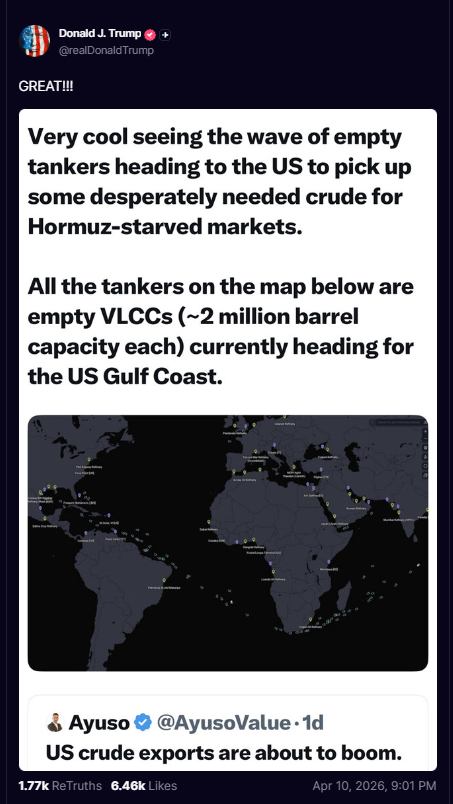
Crude oil exports out of America are set to BOOM. Our increase in production and exportation should, in theory, lower our oil costs. Our fuel prices should plummet as this export progresses.
This means fuel, flights, construction, utilities, transportation, shipping, and more on the horizon would level out to respectable levels or perhaps go beyond what we think is possible. Keep in mind, it has yet to peak as we feel the waves months after the moves are made. So the relief is not instant; we still need to plan ahead.
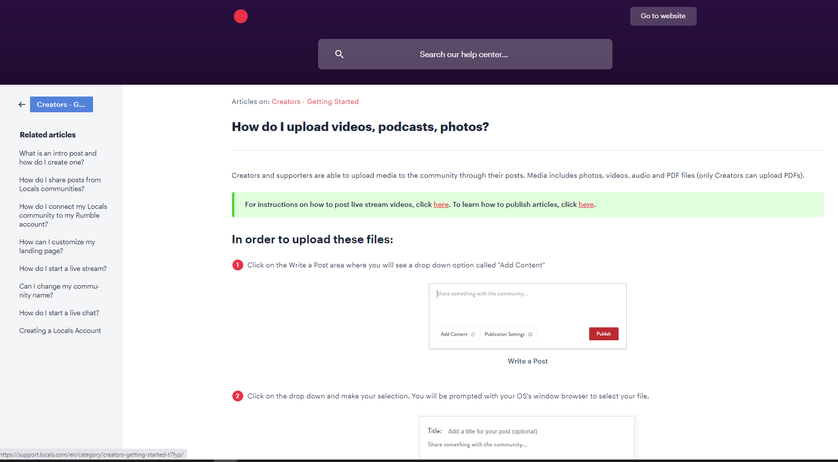
How to Use Locals Frequently Asked Questions and Help Topics:
https://support.locals.com/en/article/how-do-i-upload-videos-podcasts-photos-r49es4/
If you need more help contact LOCALS Support at: