






How to Use Locals Frequently Asked Questions and Help Topics:
https://support.locals.com/en/article/how-do-i-upload-videos-podcasts-photos-r49es4/
If you need more help contact LOCALS Support at:

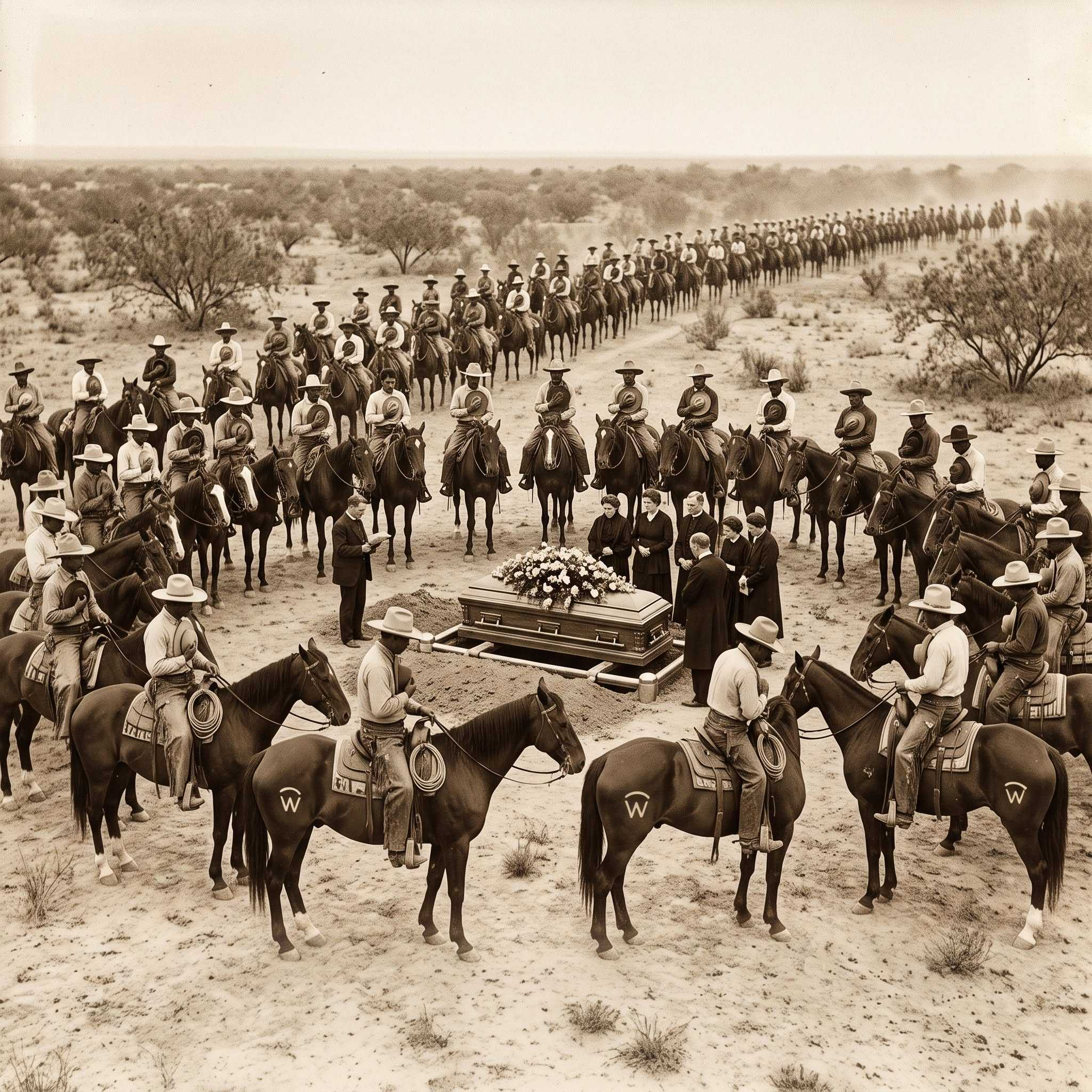
At a graveside ceremony in South Texas in the spring of 1925, two hundred Mexican-American cowboys, all mounted on quarter horses bearing the running W brand of the King Ranch, formed a single column behind the coffin of the woman they had come to bury. Some had ridden for two days across open brush country to be there. Each man walked his horse in a slow circle around her grave, hat held to his chest, and moved on. When the last had finished, they remounted and rode back into the country they had come from. The woman they had ridden to honor was named Henrietta Maria Chamberlain King. She had never ridden a horse herself.
Richard King had died at the Menger Hotel in San Antonio on April 14, 1885. He had been one of the most famous cattlemen in the American Southwest. The ranch he had built up over the previous thirty-two years on the brush country of South Texas was, at the moment of his death, one of the largest privately owned working cattle operations in the United States. The obituaries the next week described him as a titan of the cattle industry. What they did not print, because they did not yet know, was what his widow found when she sat down with the ranch's account books.
Richard King had died approximately five hundred thousand dollars in debt. In modern terms, the figure works out to roughly eighteen million dollars.
Henrietta Maria Chamberlain King was fifty-two years old. She was the daughter of a Presbyterian minister and had been raised in the austere theology of the frontier Protestant church. She was, by every contemporary account of her, a woman of unusual personal discipline. She had never sought wealth. She had sought, in her own framing, to live faithfully.
Her family had been fracturing before the debt was discovered. Her son Richard Jr. had died of pneumonia two years before her husband. Two more of her children would die before she did.
The ranch in 1885 covered roughly six hundred and fourteen thousand acres of South Texas brush country, an area larger than several entire United States counties. The cattle on it were struggling through a relentless drought. The land, to a sensible outside observer at the time, was the kind of property a widow of her age and resources would have been expected to put up for sale, settle her late husband's debts, and walk away from.
She did not walk away.
She put on the black of a Victorian widow, and she walked toward the ranch instead. She would wear black, every single day, for the next forty years.
She brought in her son-in-law, a young attorney named Robert Justus Kleberg who had recently married her daughter Alice, to manage the day-to-day operations of the ranch. Every significant financial decision, however, continued to pass across her desk. She read the ledgers. She approved the contracts. She decided, year by year, what kind of ranch the King Ranch was going to become.
What it became was something almost no observer in 1885 would have predicted.
She authorized the drilling of artesian wells across land that the cattlemen of her period had largely written off as too dry to be useful, and the wells worked. She authorized the cattle-dipping programs that were eventually adopted across Texas as part of the federal campaign to eradicate the tick that had been killing herds across the southern United States for decades. She authorized the long-term crossbreeding experiments that would, decades later, produce the Santa Gertrudis breed, the first beef cattle breed ever developed in the Western Hemisphere.
Then, in the early years of the twentieth century, she built a town.
When the St. Louis, Brownsville and Mexico Railway was looking for a route through South Texas, Henrietta King donated a substantial parcel of King Ranch land — by the most commonly cited figure, around ninety thousand acres — to bring the rail line across her property. She had decided, in her seventies, that isolated land died and that connected land thrived. The depot the railway built stood on her land. The town that grew up around the depot was named after the family. She called it Kingsville.
She built the local high school. She donated land for churches of various denominations. She funded a hospital in Corpus Christi. She donated the land for what would eventually become Texas A&M University-Kingsville.
Every property deed she issued in Kingsville carried a single restriction. No alcohol could ever be sold on the land. The restriction was perpetual. It ran with the deed in a form that no future owner could remove. She had made a private decision about alcohol decades earlier, and she had decided that the town she was building would carry that decision into the generations after her.
She continued to wear black, every day, for forty years.
She died on the King Ranch on March 31, 1925, at the age of ninety-two. By the time of her death, the property had grown from the six hundred and fourteen thousand acres she had inherited in 1885 to more than one point one million acres. The ranch had been brought, through her four decades of stewardship, into full economic health. She was, in 1925, one of the wealthiest women in the world.
The funeral took place on the ranch.
The vaqueros came. The Kineños — the Mexican-American working families of the King Ranch, many of whom had been on the property for two and sometimes three generations, descended from the original Mexican cowboys Richard King had hired in the eighteen-fifties — rode in from across the country to be present at the burial of the patrona. They came on horseback. They came on the quarter horses the King Ranch itself bred. The horses they rode carried, branded on the hip, the running W that had marked King Ranch animals since the founder's time. Some of the riders had spent two days on the trail to be there.
They lined up at the graveside. One by one, in silence, each rider walked his horse in a slow circle around the open grave, hat held to his chest. When the last man had completed the circle, the entire body of riders remounted and turned for home.
She had not been a rider. She had been something the cattle culture of South Texas had not, until her, particularly had a name for — a woman who had inherited a failing ranch in widowhood, refused to dismantle it, and spent the next forty years building it into one of the largest working cattle operations in the world.
She had spent her forty years of widowhood making absolutely certain that the men in front of her grave that day would always have somewhere to ride. See less
The UK People have Spoken!
Your Voices were heard!
Kier Starmer Resigns!🥳🥳🥳
"I will resign as leader of the Labour Party..."
"I have spoken to His Majesty - the King to inform him of my decision..."
Would that be King Trump??? 👑
Congratulations UK...a New Country unfolds!!!
Heavily medicated from surgery!
Thought it would wear off…and it has…yet an very sore.
Only update is Fauci pled the 5th and he’s now in contempt.
Have a beautiful week and we’ll connect next week.

How to Use Locals Frequently Asked Questions and Help Topics:
https://support.locals.com/en/article/how-do-i-upload-videos-podcasts-photos-r49es4/
If you need more help contact LOCALS Support at: