


How to Use Locals Frequently Asked Questions and Help Topics:
https://support.locals.com/en/article/how-do-i-upload-videos-podcasts-photos-r49es4/
If you need more help contact LOCALS Support at:


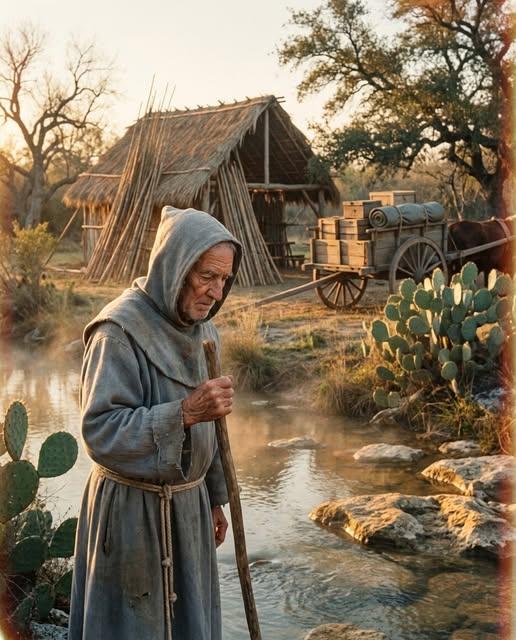
An old priest stood beside a creek in the brush country and took legal possession of a piece of ground. There was no church on it. No wall, no bell, no plaza, no stone. A diary kept by another friar that same week records only that he was building a hut.
That is how the Alamo started.
The man was Fray Antonio de San Buenaventura y Olivares, described by the Handbook of Texas as an aging and often cantankerous priest who had spent many years as a missionary in Zacatecas. He had come north with the missionary college at Queretaro, helped found a mission called San Francisco Solano near the Rio Grande in 1700, and then watched it limp from site to site for eighteen years without ever taking hold. What he did in Texas was not really a founding at all. He left the Rio Grande on the eighteenth of April, 1718, with a lay brother named Pedro Maleta, a handful of Indians, and the property that had belonged to San Francisco Solano loaded up behind him, and he carried that failed mission to better water.
He had seen the water nine years earlier, riding with Fray Isidro Felix de Espinosa and Captain Pedro de Aguirre, and the party came back impressed with the land and the springs. Then came the arguing. Six years of it in Spain. A letter to a brand-new viceroy in October 1716 that laid it on thick, promising a country where everyone wants to be a Christian and no one refuses, and mentioning a nearby mountain supposedly made of silver and gold. He got his approval that December. He also got a governor he could not stand, Martin de Alarcon, whom Olivares had recently accused of going soft on a smuggling investigation. When the expedition finally rolled north, Olivares refused to travel with him. The two men went to San Antonio separately.
On the first of May, 1718, Alarcon handed him possession of the mission site anyway. Four days later, the governor raised the royal standard a little upstream and named that spot the Villa de Bexar. The mission took the name San Antonio de Valero, half for Saint Anthony of Padua and half for the viceroy who had finally said yes.
Almost none of that happened where the tour buses stop. The 1718 site was out toward San Pedro Creek. The mission moved across the river about a year later, and moved a second time after a hurricane wrecked it in 1724, and only then settled on the ground we now call Alamo Plaza. The stone church everybody photographs was begun decades after Olivares was gone, collapsed once mid-construction, was never finished as a mission church at all, and did not get the roof it wears today until 1921. The Handbook says it flatly: much of the old mission compound now lies buried beneath city streets and buildings.
Olivares did not get an ending either. Sometime after the founding, he broke his leg. The only telling of how it comes from Adina De Zavala, writing in 1917, who has his mount's hoof punching through a log bridge and throwing him, with a priest sent for from the missions on the Rio Grande to set the bone. She gives no year, so take that as the story that came down rather than as record. What is documented is the eighth of September, 1720, when Olivares, aged, in poor health and still suffering from that leg, retired from the mission he had spent a decade fighting to get built.
Nobody knows where he died. The best reference on the period will only say that it is reasonable to assume he spent his last days back in San Juan Bautista, or perhaps in Querétaro.
He built a brush hut by a creek, lost the argument over where it ought to stand, and never saw one stone of the place laid. 🕊️
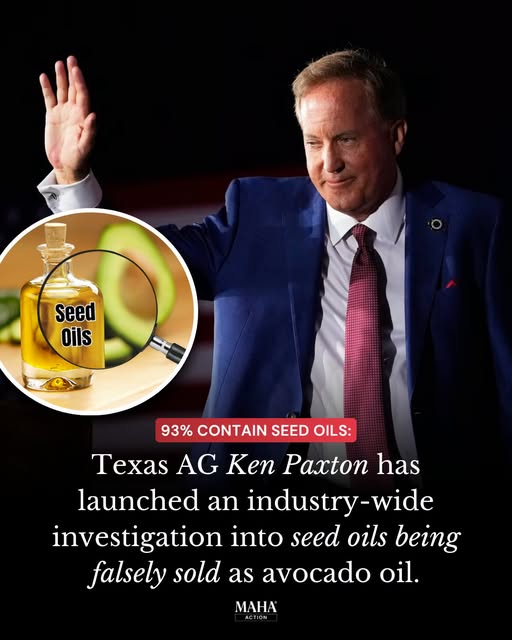
“Seed oil free” avocado oil products were recently discovered to contain seed oils.
A 2026 UC Davis study found seed oils in 93% of chip samples, 71% of mayonnaise samples, and 100% of dressing samples tested.
Now, Texas Attorney General Ken Paxton is taking action, launching an industry-wide investigation into potentially deceptive labeling.
Consumers deserve to know what is actually in their food.
Companies misleading Americans about their ingredients should be held accountable.
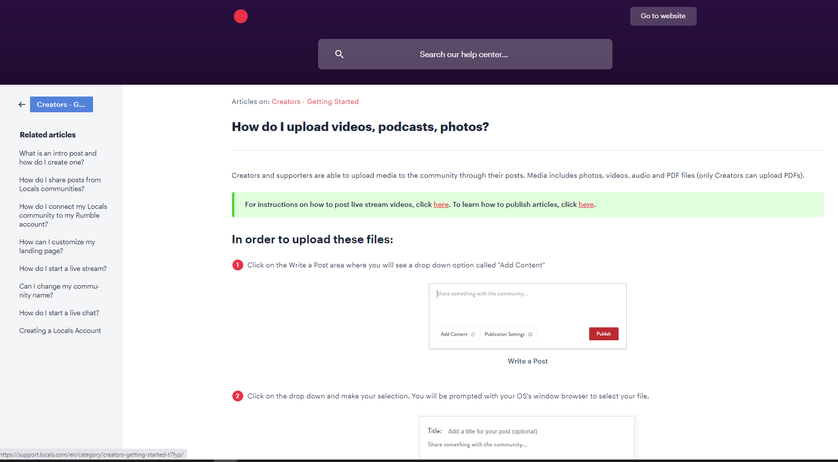
How to Use Locals Frequently Asked Questions and Help Topics:
https://support.locals.com/en/article/how-do-i-upload-videos-podcasts-photos-r49es4/
If you need more help contact LOCALS Support at: