







How to Use Locals Frequently Asked Questions and Help Topics:
https://support.locals.com/en/article/how-do-i-upload-videos-podcasts-photos-r49es4/
If you need more help contact LOCALS Support at:


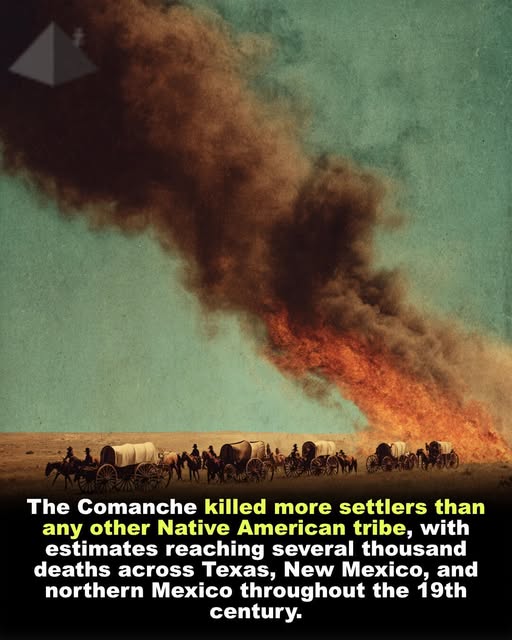
Between 1758 and 1875, the Comanche Nation killed an estimated 20,000 to 30,000 settlers, traders, and soldiers across Texas, New Mexico, Kansas, Oklahoma, and northern Mexico—more than any other Native American tribe during the westward expansion period. Their dominance stemmed from extraordinary horsemanship, developed after they acquired Spanish horses in the 1680s, transforming them into the most formidable mounted warriors in North American history. By the 1830s, the Comanche controlled approximately 240,000 square miles of territory—an area larger than modern New England—and had built what historians call the "Comanche Empire."
The Comanche waged systematic resistance against Spanish, Mexican, Texan, and American expansion for over a century. Their raiding strategy targeted isolated settlements, wagon trains, and ranches, often taking captives for ransom or adoption. Major conflicts included the Council House Fight of 1840, where negotiations turned into a bloodbath killing 35 Comanche leaders, and the continuous Texas-Comanche wars that depopulated entire frontier regions. The Texas Rangers were specifically created in 1823 primarily to combat Comanche raids that were devastating settlement attempts.
Their military effectiveness came from tactical innovation and brutal efficiency. Comanche warriors could shoot arrows with deadly accuracy at full gallop, reload while hanging from their horses' sides, and execute coordinated attacks involving hundreds of riders. They adapted quickly to firearms and conducted raids spanning hundreds of miles within days. Their reputation for torture and mutilation of captives and the dead—documented extensively by survivors—served as psychological warfare that deterred settlement across vast territories.
The Comanche's power ended through the convergence of three factors: the near-extinction of the buffalo (their primary food source), relentless military campaigns by the U.S. Army under Generals Sherman and Sheridan, and diseases like smallpox and cholera that devastated their population. The Red River War of 1874-1875 proved decisive when Colonel Ranald Mackenzie's forces destroyed Comanche winter camps, killed their horses, and forced the surrender of the last free bands. Chief Quanah Parker led the final holdouts onto the Fort Sill reservation in June 1875.
The Comanche killed more settlers not from inherent savagery but from defending their territory with unmatched military capability against relentless invasion. Their century-long resistance delayed American expansion across the Southwest by decades and demonstrated that indigenous peoples could match, and often defeat, technologically superior forces through tactical brilliance and intimate knowledge of their homelands. Today, approximately 17,000 Comanche descendants preserve their culture, reminding us that this history involved real people fighting for survival against impossible odds.
#ComanchemEmpire #FrontierHistory #PlainsIndianWars
Food for thought y'all!
The BAD APPLE EFFECT 🍎
I'm seeing more and more people that fall victim to this phenomenon. One negative reaction attracts others to it like a magnet. One that's hard to loosen the grip from once you submit to it!
We also have to ponder how many negative comments are actually bots trying to bring you down and draw you into this field that consequentially affects your quality of life!
I believe we recently found out that 50% of the comments on social media are bots. That leads me to believe that this is a planned weapon being used against others.
When you listen to this video you'll understand how taking part in their narrative is only a set up for our failure as God's children!
God is of love, comfort, and forgiveness. God is not of hate, fear, or division. Anyone sowing discord is either part of that plan to bring you down or is falling into the trap themselves!
"Sowing discord" means intentionally causing division, conflict, distrust, or strife among a group of people, ...
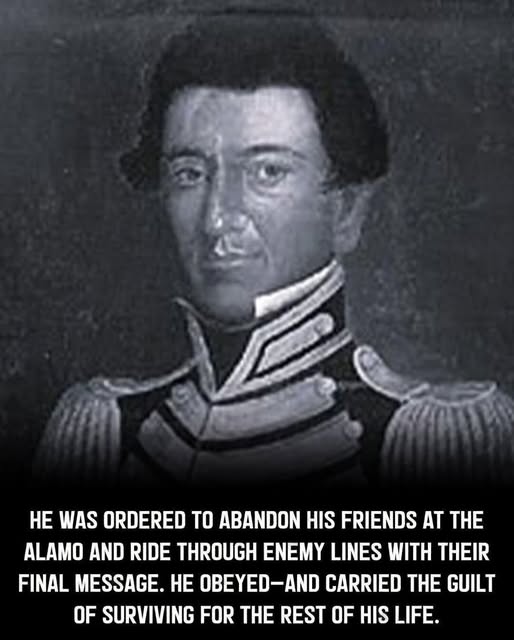
He was ordered to abandon his friends at the Alamo and ride through enemy lines with their final message. He obeyed—and spent the rest of his life carrying the guilt of surviving.
February 1836. The Alamo mission in San Antonio was surrounded by thousands of Mexican troops under General Santa Anna. Inside, roughly 200 Texian and Tejano defenders knew they were probably going to die.
Captain Juan Seguín knew it too.
He was thirty years old, a Tejano rancher who'd joined the Texas Revolution despite being ethnically Mexican. His father had fought for Mexican independence; now Juan was fighting against the Mexican government for Texas independence.
It was complicated. And about to get worse.
Commander William B. Travis gathered his officers. The situation was desperate—no reinforcements were coming, supplies were dwindling, Santa Anna's artillery was pounding the walls.
Travis needed someone to carry messages through enemy lines to General Sam Houston. Someone who could navigate the Texas countryside, who spoke Spanish ...

How to Use Locals Frequently Asked Questions and Help Topics:
https://support.locals.com/en/article/how-do-i-upload-videos-podcasts-photos-r49es4/
If you need more help contact LOCALS Support at: